
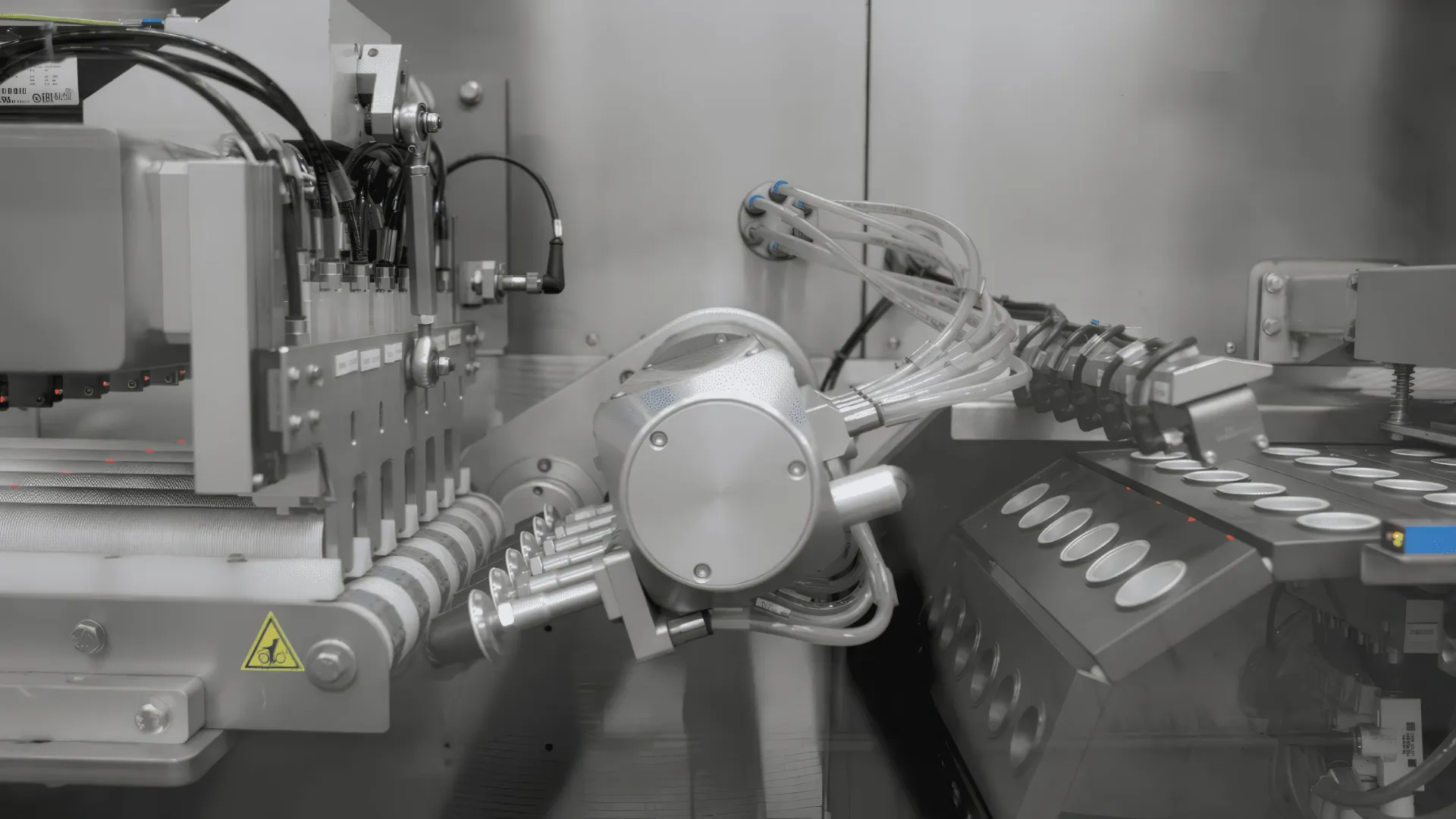
A coffee roaster may offer a high-quality product and have modern production facilities without necessarily being the most suitable partner for a national retail network. For a grocery retail buyer, the assessment primarily concerns the manufacturer's ability to sustain an ongoing supply programme: managing increases in volume, coordinating multiple SKUs, meeting delivery schedules and ensuring consistent product quality. These are the key aspects to examine when assessing a coffee roaster's reliability in large-scale private label coffee production.
1. Production capacity and flexibility in managing volumes
The first factor to assess is the actual production capacity. What matters is not only the quantity of coffee a facility can process, but also the availability of resources to handle new orders, peaks in demand and increases in volume.
It is important to verify the ability to produce different SKUs, manage multiple formats and plan supplies according to sales forecasts.
A specialised manufacturer such as Coind, which has been producing retailer own-brand coffee since 1961, is an example of a company focused on developing private label solutions tailored to customers' needs.
A retail chain may start with a limited number of SKUs or stores and subsequently expand the project. The manufacturer must therefore be able to assess not only the initial requirements but also potential growth scenarios.
2. Production organisation, quality control and blend consistency
For a national retail chain, it is essential to ensure consistent coffee quality over time, maintaining the characteristics of the blend, flavour profile, roast and, where applicable, grind unchanged.
A well-organised coffee roaster should adopt documented procedures for raw material control, production process monitoring, finished product inspection and batch traceability. The aim is to standardise processes without compromising quality, through systematic controls that do not depend solely on the experience of individual operators.
A practical example is Coind's coffee processing system, which includes selection, blending, roasting, grinding and packaging.
In private label production, any variations in quality can directly affect perceptions of the retailer's brand and consumer confidence. Buyers should therefore verify which controls are carried out, which records are retained and how any changes to raw materials or product specifications are managed.
3. Managing a private label coffee range: SKUs, formats and packaging
A private label project may include whole bean coffee, ground coffee, capsules and coffee pods, with different formats and customised packaging.
Managing multiple SKUs requires experience and precise coordination of orders, packaging materials and artwork changes. It is therefore necessary to verify which formats are available, what minimum order quantities apply and how long it takes to procure customised packaging.
Coind offers a range of product and packaging solutions for the private label market. For a retail chain, developing a product range with a single partner can simplify coordination.
4. Logistics and supply continuity: what should be assessed?
Production capacity does not automatically guarantee on-time deliveries. Before selecting a supplier, it is useful to assess:
- Order and inventory management procedures
- Order preparation lead times and delivery arrangements
- Ability to manage fluctuations in demand
- Batch traceability
- Procedures for complaints and non-conformities
- Availability of commercial and operational contacts
It is also advisable to agree on service performance indicators, such as on-time delivery and order completeness, to measure the partner's reliability in concrete terms.
5. Financial sustainability of the supply project
The volatility of green coffee prices is a factor to consider when assessing the financial sustainability of the supply arrangement. A significant increase in volumes may also require larger raw material inventories, investment in packaging and additional working capital.
For this reason, it is important to assess payment terms, any specific investments required and the financial sustainability of the project for both parties.
6. Minimum order quantities, operational conditions and commercial support
Industrial production requires efficient planning. Minimum order quantities may be necessary to keep start-up costs, format changeover costs and material procurement costs under control. Buyers should compare order quantities with forecast sales, storage capacity and product stock turnover rates.
For customers operating in several markets, the ability to communicate in different languages can also facilitate coordination and document management. Coind has a dedicated, multilingual commercial support service designed to assist customers throughout the various stages of order management.
From assessing requirements to selecting a supply partner
The most suitable manufacturer is not necessarily the one with the largest facilities or the lowest price. It is the one whose organisation is compatible with the required volumes, delivery schedules, quality standards and the customer's growth prospects.
For a private label coffee project, the decision should therefore be based on verifiable data, clear procedures and commercially sustainable terms.
A well-conducted preliminary assessment makes it possible to identify potential issues before the collaboration begins, reduce operational risks and build a supply relationship focused on long-term continuity.
Are you evaluating a coffee roaster to supply private label coffee to your retail chain? Contact Coind's sales team to explore potential opportunities for collaboration.

 English
 Italian
 German
 Spanish