
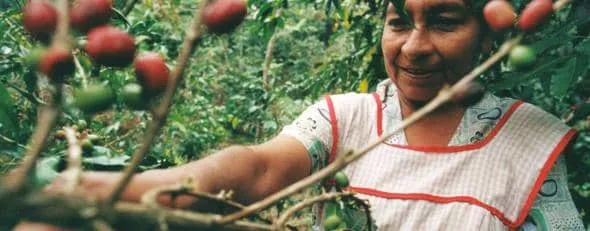
Some believe it is Ethiopia, some believe it is Yemen, some believe it is Persia: theorigin of coffee mobilizes the imagination and, over the centuries, there are many legends that have arisen around the birth of the beverage, which is now beloved all over the world.
The best known story is that of the Ethiopian shepherd named Kaldi: one day, according to the story, he and his goats encountered a coffee plant. The animals, intrigued, began to eat its berries, with no particular effects except that they showed marked energy and that, that night, none of them slept. Legend has it, then, that Kaldi realized that it was precisely those dark beans that were causing this effect and then decided to toast, grind and steep the fruits of the coffee plant, obtaining, in fact, the first cup of coffee in history.
Origin of coffee: where did what we drink come from?
Beyond the mysterious origins, what we are certain of today is that coffee is widespread throughout the world. The most up-to-date data, collected by the International Coffee Organization, record that the world's largest producers are Brazil, Vietnam, Colombia and Indonesia, followed by Mexico, Guatemala, Honduras, Peru, Ethiopia and India.
In each area a different type and quality is produced based on the type of crop suited to the climate. In general, the most common crops are Robusta and Arabica crops. Let us see, then, continent by continent, which are the most valuable, curious and tasty coffees and their origin.
Africa
Angola
The country, favored by its tropical two-season climate, was until a few years ago among the world's top five producers of Robusta. Currently, production is greatly reduced. Angola also produces Arabica, in smaller quantities and used mainly for blends.
Benin
The southern area of this African republic has a particularly favorable climate for coffee cultivation, both Robusta and Arabica, by virtue of the double rainy season that ensures a constant and good quality production.
Burundi
Arabica and Robusta plantations are an important resource for this very poor nation. In particular, Arabica is highly valued because of its full-bodied nature, and it is exported mainly to the United States.
Cameroon
The area of the capital Yaoundé is the one in which the best climatic balance characteristics for growing Robusta (natural) and Arabica (washed) species: the latter stands out for its excellent, almost spicy aroma.
Congo
The only quality grown is a natural and washed Robusta: the product constitutes, for the country, a very significant export resource.
Ivory Coast.
Among the world's largest coffee producers, Côte d'Ivoire, each year, manages to produce enough coffee to meet much of the world's needs with the natural and washed Robusta quality. In addition to Robusta, Arabusta, a peculiar cross between Arabica and Robusta created a few years ago and intended, in particular, for the French market, also grows in the country.
Ethiopia
Ethiopia, as we have seen, is a country with a great and historic coffee tradition. Just from one region, Caffa, comes a unique type: the Coffea Arabica. The climate and type of land mean that coffee plants grow wild, requiring the hand of man only for drying.
Kenya
Plantations are of natural and washed Arabica: light coffee of excellent quality and flavor. Notable are the Chragga and Kenya AA varieties considered rarer than Jamaican Blue Mountain. The best is achieved by Estate Kenya, considered one of the best coffees in the world.
Madagascar
The species grown are Robusta, Arabica and Excelse.
Central African Republic
Plantations are of natural Arabica. It is exported mainly to France, a country that supports it economically due to severe drought problems.
Tanzania
Most Tanzanian coffees grow on the slopes of Kilimanjaro and are named just Kilimanjiaro, Moshi or Arusha. Other coffees that grow in the south are called Mbeya. Natural, washed Arabica coffees have a vinous, sweet flavor.
Uganda
In Uganda, one in four inhabitants grows coffee. Of note is the Robusta, called Bugishu, with a full aroma and spicy flavor.
Latin America and the Caribbean
Bolivia
Washed Arabica coffee, produced in Bolivia, is normally all absorbed by the domestic market. It is a high quality coffee, prepared with great care and good appearance.
Brazil
Brazil is the leading producer of unwashed Arabica coffee: Arabica grown in the Brazilian highlands manages to meet much of the world's demand. Brazil also currently produces the Cohillon quality (Brazilian Robusta), while the quality in greatest demand is Bourbon Santos, which grows in rugged, mountainous terrain. Other globally successful qualities produced in Brazil are Parana and Rio.
Colombia
Globally, Colombia is second to Brazil in the volumes of coffee grown, while it ranks first in terms of quality producing indeed many different varieties of excellent coffee. In fact, in this regard, the government has decided to unite all under the acronym M.A.M. (derived from the growing centers Medellin, Armenia, Manizales) the best Colombian productions. The Medellin quality is the best for body and acidity, the Armenia + a little lighter, but prized for aroma.
Costa Rica
Costa Rica owes its rich tradition as a coffee-producing country to the neighboring island of Cuba: in fact, it was from here that the first coffee plants arrived in the late 1700s. The peculiarities do not end there: it is forbidden by law, in fact, to grow Robusta, while the best-known types of coffee are San Marcos from Tarrazu, Tres Rios, Heredia, and Alajuela, grown with the wet method, have a full body and sweetness and a marked acidity.
Cuba
Produces, although not in abundant quantities, natural and washed Arabica coffee.
Ecuador
In the country, the cultivation of coffee, of washed Arabica and Robusta qualities, is regularly side by side with that of banana and cocoa: from Ecuador they assure that this is the secret to obtaining coffee of absolute quality.
El Salvador
Three-quarters of El Salvador's production is destined for the foreign market. The coffee, produced at altitude, has a light, sweet taste with moderate acidity. Plantations that are grown at lower elevations yield a less full-bodied coffee called Central Standard.
Jamaica
Jamaica's is the finest coffee in the Caribbean: it is grown in mountainous areas and excels in the Blue Mountain, High Mountain, Jamaica Mountain Choice and Prima Washed varieties.
Guatemala
Guatemala is also to be counted among the countries that contribute heavily to the world's coffee needs with washed Arabica and Robusta qualities. From the Arabica are distinguished: Bourbon, Tipica, Maragogype, Coban, Antigua, and Amatitlan, which are produced by the wet method and have high acidity, a spicy aroma, and a chocolatey flavor.
Haiti
Produces washed and natural Arabica: there is a peculiar variant named after the country's capital: this is Port Au Prince, which offers an almost spicy aroma.
Honduras
Produced by the wet method, the coffee produced in Honduras is generally used to correct other qualities. The coffee results light and low in acidity.
Mexico
Mexican coffee has a "fragrant" but light taste and is produced entirely by the wet method. The most popular variety is the light-bodied, sweet-tasting Altura Coatepec with a chocolate flavor and sour aftertaste. Also considered excellent is the Pluma Coffee.
Nicaragua
Particularly noteworthy is that Nicaragua grows the world's largest Maragogype beans. The coffees grown are valuable and appreciable for their aroma.
Dominican Republic
The most widespread quality is Santo Domingo with a full, strong flavor. Other varieties include Cibao, Bani, and Ocoa, all produced by the wet method.
Venezuela
Local coffees called "Maracaibo" are divided into the varieties Meridas, Caracas, Caracas Blue, Tachiras, and Cucuta. Each of these qualities yields a sweet, mild-tasting coffee that is among the most popular in the world.
Asia
China
Plantations in China are located in the mountainous Yunnan region, furrowed by the Red River and Mekong valleys. Yunnan is a variety that ensures a rich, full-bodied, low-acid beverage valued especially by the American market.
India
Indian coffee has a mild and pleasant taste that is grown in a variety of qualities: Robusta, Monsoon, Arabica Cherry, and Arabica Monsoon. Two varieties' stand out among them all, Mysore and Malabar with a full and mild taste.
Java
In a short time Dutch exporters brought Arabica trees to Java, which became has long been the world's leading producer until pests destroyed its entire industry in 1870. The land was then cultivated again, using disease-resistant but qualitatively less valuable plants. Some coffees are stored for two or three years and sold as Old Java: this process, causes the coffee to lose acidity and gives it a stronger body and sweeter taste.
Papua New Guinea
An excellent natural and washed Arabica is grown in Papua New Guinea: with this production it competes with the neighboring islands of Java and Timor.
Sumatra
Two of the world's best and most popular coffees come from Sumatra, Mandheling and Ankola, and both are dry-processed. The virtue of the island's coffees is that they are harvested exclusively by hand.The resulting flavor is so strong and persistent that it is advisable to mix it with milk.
Timor
Although Arabica production does not reach substantial quantities, Timor's coffee is of excellent quality and very full-bodied.
Vietnam
Around the mid-1860s, a group of French missionaries first introduced coffee cultivation in Vietnam. Production remained negligible until 1980. Since 1990, however, it has grown consistently to the point where it has become the world's leading coffee exporter for Robusta quality.
Yemen
The coffee we now commonly call Mocha grew in Yemen, the name derived from the port from where it was formerly shipped. Typical is the chocolate flavor that remains of Arabian Mocha-one of the oldest, most traditional and valued coffees in the world. Also typical of Yemen, the Mattari, which has a full body and chocolatey flavor, and the Sanani, which has a pronounced and flavorful acidity, are popular.

 English
 Italian
  German
  Spanish