
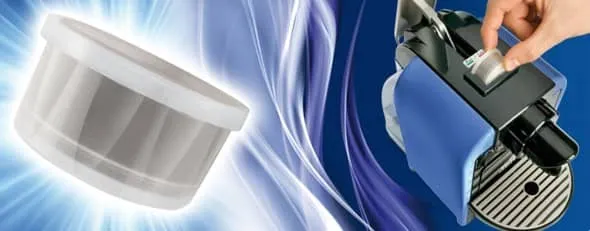
Buying an espresso machine radically changes the daily habits of those who love or feel the need for a cup, at least, every day in order to carb up. Simply insert the pod, capsule or ground coffee and press a button: nothing could be easier, at least until we get into the problem of setting up the coffee machine correctly and maintaining it, as well as cleaning it.
It is not, however, so complicated that we give up: let's look at some useful tips that can be useful for everyone. In fact, it depends of course on the type of coffee machine we are using, but many pointers can also be applied to professional tools that require more attention.
How to set up your espresso machine
Each coffee blend is the result of selecting the finest and most suitable varieties, in order to obtain, through careful processing, a result with a balanced taste. The choice of raw materials, therefore, and the most popular techniques are fundamental ingredients for a good cup of espresso, however whether we use a professional or home machine, it is equally important that the setting is correct.
Although each brand and manufacturer has its own rules-and in this regard the reference is to specific websites and instruction manuals-there are operating parameters to be respected.
Let us see, in a brief and timely summary, what they are:
- Boiler pressure: 0.95 bar ± 0.05
- Pump pressure: 9 bar ± 0.5
- Temperature: 90°C ± 2
- Extraction time: 25 sec ± 2
- Dose grams: 7 g
- Cup volume: 25 ml ± 2 (in 25 seconds)
- Cream height: 2-3 mm approx.
Adjusting the pressure
On the subject of boiler pressure, remember that it should be adjusted based on how the coffee machine is used. In fact, if we are dealing with the setting of our home tool, the value should remain between 0.9 and 1.0 bar.
In contrast, professional espresso machines that are used in cafeterias, bars, and bistros, which also brew more than 50 coffees per hour and offer the opportunity to use boiler water also for cappuccinos and hot teas, should keep the pressure between 1.0 and 1.0 bar.
As a general guideline, it should be remembered that the boiler pressure is directly proportional to the temperature reached.
As for pump pressure , on the other hand, we must observe the gauge lever during coffee extraction: at this stage, in fact, it must be in the green zone, and in any case between 8 and 10 bar. Incorrect pressure has the effect of increasing the brewing speed, while reducing the coffee extraction time, thus invalidating the result.
Maintenance: some valuable tips
Once set up correctly, the coffee machine is ready to be used, but we must remember that to ensure that the result is always optimal we must keep a record of maintenance activities to be carried out regularly throughout the year.
If, in fact, on a daily and weekly basis we have to take care of cleaning, as we will see in the next section, there are some golden rules for the proper functioning of the instrument that involve regular technical interventions.
First, in fact, once every two weeks or so, thestainless steel shower filters need to be removed to clean them thoroughly, also removing the "shower protectors" that need to be placed back on a heat source, such as a simple stove, to let the oily residues of the coffee machine melt away.
Secondly, we should not forget that some parts need to be replaced due to wear and tear. Think, for example, of filters, which need to be changed at least once a year, and even more frequently if we make a lot of coffee. But also to rubber gaskets. In fact, since they operate under high temperatures, they tend to wear out rather quickly. The advice, in this regard, is to change them at least twice a year, paying attention to the state of wear and tear because they may need to be replaced even more often.
How to clean the espresso machine
In addition to maintenance, the espresso machine, as is normal, will tend to wear out with wear and tear, and as a result, it is essential not to neglect even cleaning to ensure a great-tasting espresso.
In fact, one of the first signs that the machine may need cleaning is the unpleasant, or different from usual, taste of the coffee. In other cases, we may notice the problem because we observe that the coffee goes down more slowly or in a discontinuous manner: in this case, limescale that prevents the liquids from flowing normally is probably responsible.
The useful ingredients for cleaning the coffee machine are vinegar, water and a container that, beforehand, should be placed where the cups usually go to collect the water that will come out during the washing process. In the water tray, on the other hand, put a solution of vinegar, one-third, and water, two-thirds.
At this point, to continue with the cleaning, you need to turn on the coffee machine and act as if it were making espresso cups until the water and vinegar solution is completely depleted. When the container is empty, add a dose of water only and operate the machine again (at least) once: this way, it will be the hot water that will remove the vinegar residue.
The solution of water and vinegar is the cheapest and most practical choice for cleaning the coffee machine, but the advice is to always check if somehow thevinegar can cause damage to the object. The alternative is often offered by the manufacturer itself, which also markets special descaling agents that are used, precisely, for periodic cleaning of the tank and internal circuits.
In addition, we are also helped by customized solutions made, for example, by Co.Ind under its PKSan brand. In fact, it is a real line of products designed for cleaning and sanitizing coffee machines. There are, by the way, degreasing detergents and detersolvents, descaling descaling agents, polishing and disinfecting products.

 English
 Italian
  German
  Spanish